
Gorgeous and glittering Monaco is a tiny royal principality on the French Riviera. Less than two square kilometers in size, it is perhaps the most glamorous little stretch of land on the planet. There is a seductive quality to the scenery, with its deep blue sea, graceful palm trees, and vibrant flowers. The most dramatic feature is the steep, rocky promontory jutting out into the Mediterranean, called “Le Rocher” (“The Rock”), which contains historic Monaco, also known as Monaco-Ville. Full of charming, narrow streets, Monaco-Ville dates back to the 13th century when the principality was founded.
A place of sublime natural beauty, Monaco has the lush vegetation and balmy weather of the Côte d’Azur. It’s a quick (30-minute) train ride away from Nice, but it has the feel of another world. Considered to have Europe’s highest per capita income, Monaco exudes an air of extravagant wealth, as seen in the upscale hotels, designer boutiques, luxury yachts, and opulent restaurants.
See also: Where to Stay in Monaco
1 Monte-Carlo
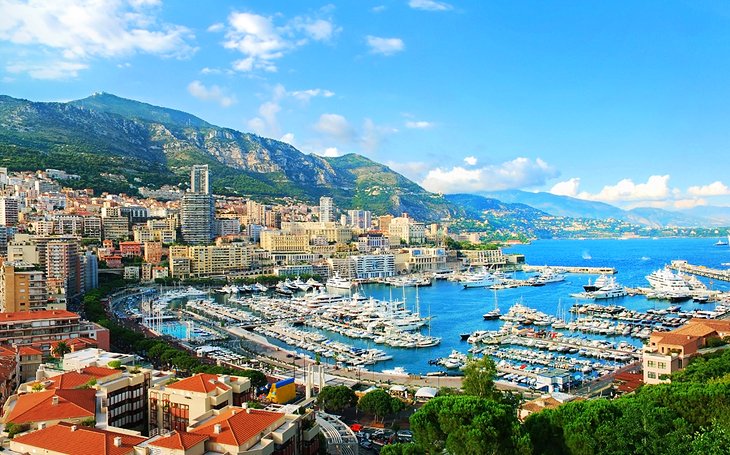
Indulge in the extravagant world of Monaco where decadence and luxury are a way of life. Despite its small size, Monaco packs an enormous amount of glitz. Monte Carlo is the district with the most glamorous atmosphere, in a setting of stunning natural beauty. Monte-Carlo stands on a rocky promontory to the north of the Port of Monaco. There are breathtaking seaside views from the gorgeous terrace of Place du Casino. As Monaco’s wealthiest district, Monte-Carlo attracts the rich and famous. Ferraris and “beautiful people” fit right into this neighborhood. For tourists, Monte-Carlo is a great place for people-watching or to enjoy fine dining. Gourmands can choose from three Michelin-starred restaurants as well as other excellent options. Monte-Carlo is intersected by two elegant boulevards, the Boulevard Princesse Charlotte in the west and the Boulevard des Moulins at its southwestern end. There are many fashionable shopping streets, such as the Avenue de la Costa with its luxury boutiques. The Opera House is also in this district.
2 Palais du Prince
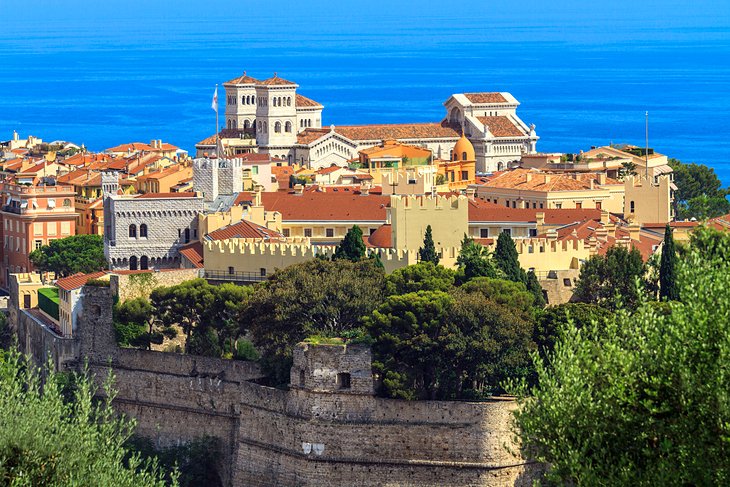
In a unique position high above the sea on the picturesque peninsula of Le Rocher, the Palais du Prince is home to the oldest monarchy in the world. The Genoese noble family of Grimaldi established Monaco in 1297 after they captured the land from the Republic of Genoa. Originally built in the 13th century as a Genoese fortress, the site affords panoramic views, which provided defensive purposes in the Middle Ages. The fortress was renovated throughout the centuries and transformed into a luxurious Louis-XIV-style palace.
The State Apartments of the Palais du Prince is a private residence but is open to the public at certain times of the year. (Check the official website for opening times.) Visitors can see the sumptuous Italianate gallery adorned with 16th- and 17th-century frescoes; the gilded “Blue Room” featuring a resplendent decor of blue and gold; the wood-paneled Mazarin Room; and the Empire-style Throne Room, which has an impressive Renaissance fireplace. Be sure to admire the 17th-century Palatine Chapel and the Main Courtyard, with its monumental 17th-century Carrara marble double staircase. In July and August on some Sundays and Thursdays, the Monte-Carlo Philharmonic Orchestra performs classical music concerts in the main courtyard. Another tradition of the Sovereign House, the Changing of the Guard takes place every day at 11.55am in front of the palace. This ceremony called the Compagnie des Carabiniers du Prince is conducted by the highly trained Palace Guards and accompanied by the Orchestre des Carabiniers du Prince military brass band musicians.
Address: Place du Palais, Monaco-Ville
Official site: http://www.palais.mc/en/index.html
3 Musée Oceanographique
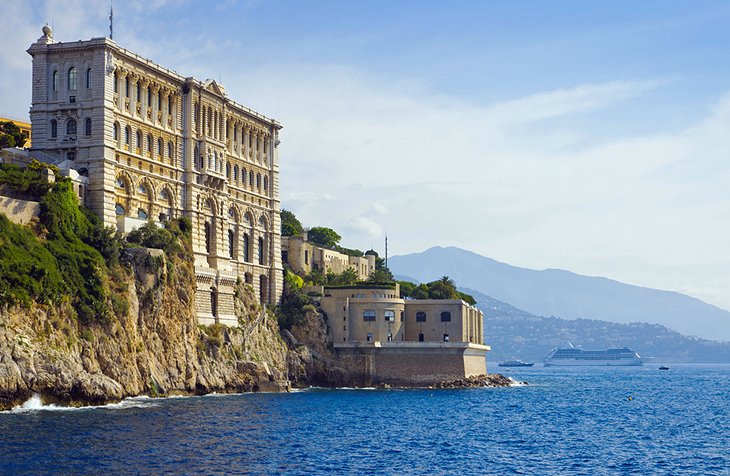
The Musée Oceanographique lies in a spectacular location on Le Rocher, almost 90 meters above sea level. In this dramatic setting, the museum and aquariums stand on massive foundations that took 11 years to build. This is one of the world’s oldest aquariums, commissioned by Prince Albert I, great grandfather of H.S.H. Prince Albert II, and opened in 1910. Constantly evolving, the Oceanographic Museum has world-renowned exhibits of marine science and oceanography. The museum’s valuable scientific collections include finds from the exploration of Prince Albert I and the discoveries of Jacques-Yves Cousteau.
The highlight of Musée Oceanographique is its aquariums containing rare species of fish and marine life in magnificent shapes and colors. There are three Aquariums: the Tropical Aquarium, Mediterranean Aquarium, and Shark Lagoon. More than 6,000 specimens swim around in approximately 100 pools, reconstructed as their natural habitat-including coral reefs. There is also a Turtle Island and a Touch Tank where visitors can feel a sea urchin, stroke a starfish, or hold a baby shark. From La Terrasse Restaurant on the roof terrace, enjoy superb panoramic views of the coastline and the sea. On a clear day, it is possible to see all the way to the Italian Riviera.
Address: Avenue Saint-Martin, Monaco-Ville
Official site: http://www.oceano.mc/en
4 Jardin Exotique
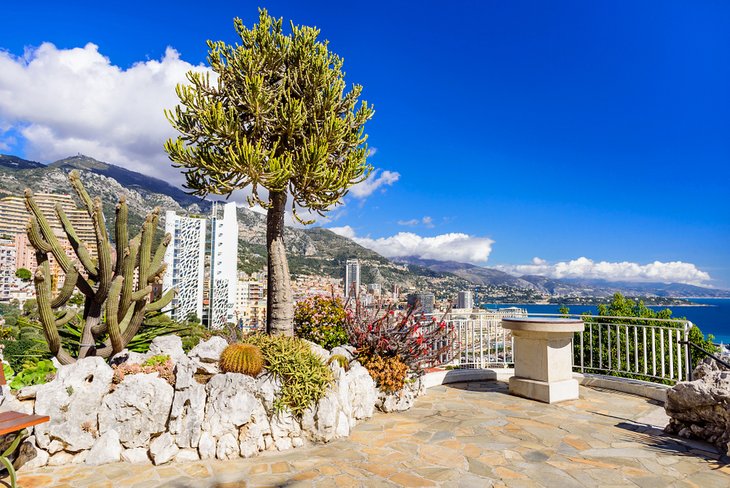
One of the most delightful things to do in Monaco is visit the gloriously scenic Jardin Exotique. The garden is in the Fontvieille area (the more modern section) of Monaco, outside the historic center. For visitors who arrive by car, there is a parking lot above the gardens at 63 Boulevard du Jardin Exotique. Perched on a steep cliff overlooking the Mediterranean, the Exotic Garden is a luxuriant place with flourishing vegetation and mesmerizing views of the sea. Because of the balmy weather and consistency of sunshine on this hillside, tropical plants are able to thrive. Opened in 1933, the gardens contain a remarkable variety of species from Africa and Latin America to the United States and Mexico. A wide variety of succulents flourish in this ideal climate. The gardens are carefully tended and extend dramatically along the craggy mountainside.
The Exotic Garden also has an Observatory Cave filled with stalactites and stalagmites. The vicinity of the cave was once inhabited by prehistoric humans. Guided tours of the cave are available every hour, beginning at 10am until an hour before closure. To learn more about the prehistoric era and the history of early civilization, visit the Anthropology Museum in the gardens. This museum includes a collection of coins and ornamental objects from the pre-Roman and Roman periods.
Address: 62 Boulevard du Jardin Exotique, Monaco
Official site: http://www.jardin-exotique.mc/en/
5 Cathedral
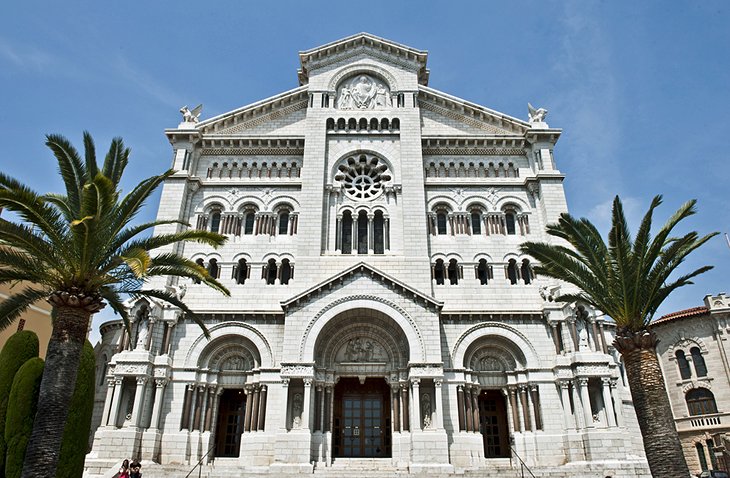
This Roman-Byzantine-style cathedral was constructed out of striking white stones from nearby La Turbie. The cathedral is the burial place of the Princes of Monaco and houses tombs of past sovereigns Prince Rainier and Princess Grace. Although the cathedral is relatively modern (built between 1875 and 1884), the interior features an altarpiece by the Niçois painter Louis Bréa dating from 1500. Another noteworthy feature of the sanctuary is the Episcopal throne of Carrara white marble. The cathedral has an impressive grand organ that is used for religious services as well as concerts of holy music. Every Sunday at 10am from September through June, mass is sung by the “Les Petits Chanteurs de Monaco” and the “Cathedral Choir.” The cathedral is open to the public (free admission) for visits except during religious services.
Address: 4 Rue Colonel-Bellando-de-Castro, Monaco-Ville
Popular Tours
21 Reviews
Monaco Shore Excursion: Private Day Trip to Monaco, Eze and Nice
Check Prices
209 Reviews
Monaco Hop-on Hop-off Tour via Open-Top Minibus
Check Prices
6 Les Jardins Saint-Martin
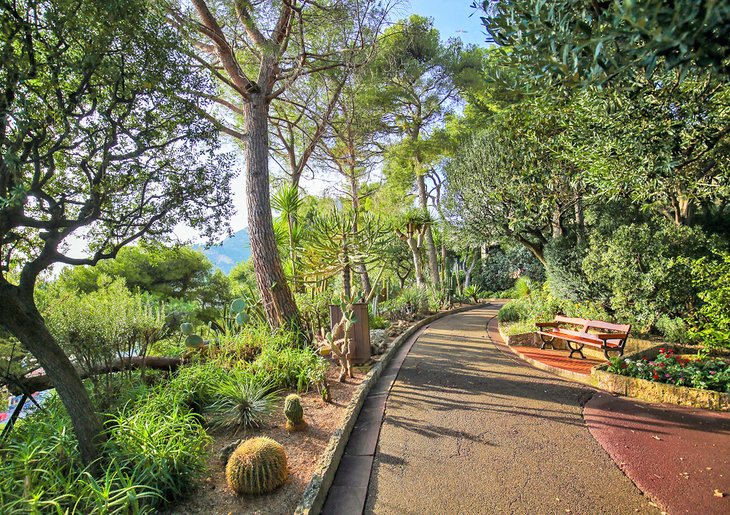
Overlooking the serene blue waters of the Mediterranean Sea, Les Jardins Saint-Martin lie near the Musée Océanographique and would be an ideal complement to visiting the museum. The gardens feature a statue that commemorates Prince Albert I who was renowned as a marine researcher. The Saint-Martin Gardens extend along the coast around Le Rocher peninsula with its steep cliff facing the sea. These dramatic gardens offer a rich display of exotic species and vibrant flowers that flourish under the Mediterranean sunshine. Small paths that weave around the rocky slopes and grassy ridges invite visitors to take a leisurely stroll. Stop to admire the little ponds, fountains, and beautiful viewpoints. There are benches placed in just the right spots to relax and take in the gorgeous scenery.
Address: 2 Avenue Saint-Martin, Monaco
7 Formula One Monaco Grand Prix
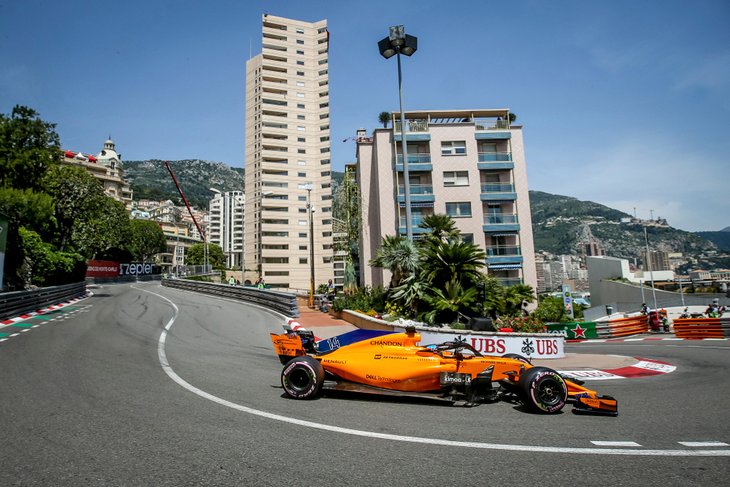
The famous Formula One Monaco Grand Prix race takes place in Monte-Carlo every year on the last weekend in May. This is the only car race in the world that is held on city streets. The course runs from the Boulevard Albert 1 up toward Place du Casino and around the harrowing turn in front of the Monte-Carlo Fairmont Hotel. Organized by the Automobile Club of Monaco, the Monaco Grand Prix is one of the world’s most popular sporting events. The narrow streets are not ideal for the race cars, but the race continues for the sake of tradition (it has been going since the early 20th century). Because of the crowds, it’s difficult to get a good view, but the atmosphere is worth it. Another big event in May on the French Riviera is the Cannes Film Festival.
8 Opéra de Monte-Carlo (Salle Garnier)
Opéra de Monte-Carlo (Salle Garnier)
The Monte-Carlo Opera House is found on the Place du Casino, a lavish public square in Monaco’s most glamorous neighborhood. Lined by palm trees, this splendid square features an impressive fountain and a terrace with superb views of the coastline. The Opera House fits right into this elegant scene. Built in 1878, it was designed by Charles Garnier, the architect of the Opera House in Paris. The auditorium of the Opera House, called the “Salle Garnier” is entirely decorated in red and gold, with a profusion of intricate bas-reliefs, amazing frescoes, and striking sculptures. The Salle Garnier was inaugurated by Sarah Bernhardt in 1879. For more than a century, opera and ballet have entertained audiences here, and the Opera House has welcomed many world-class opera singers. The Monte-Carlo Opera House offers mostly classic operas but also hosts other musical recitals, concerts, and ballet performances. The Opera Season begins with a Gala Opening event in September and runs from September through April. Although the Salle Garnier is the main venue for the Monaco Opera, some performances are held at the Salle des Princes and the Salle Kreizberg.
Address: Place du Casino, Monte-Carlo, Monaco
9 Monaco Harbor
Monaco Harbor Trish Hartmann / photo modified
At the foot of the cliff, Monaco’s harbor is a busy port scene packed with yachts. The square-shaped harbor (Port de la Condamine) was constructed between 1901 and 1926 to provide berthing for large numbers of yachts. Many luxury yachts are docked here, including the Prince’s private vessel. As would be expected for a capital of yachting, Monaco has a prestigious Yacht Club in front of the marina. The Yacht Club de Monaco on Quai Louis II brings together more than 1,600 members (private yacht owners) from 66 different countries. The Yacht Club is presided over by HSH Prince Sovereign Albert II, who founded the club in 1953. In keeping with its high-profile image, the club hosts events such as yacht shows, races, the biennial Monaco Classic Week (a weeklong presentation of vintage boats), and the Fête de la Mer (a festival of water sports and maritime activities).
The port is a pleasant area to stroll or stop for a snack. There are many restaurants and cafés with outdoor seating to enjoy the seaside setting. From the port, tourists can also take a boat cruise (two- to four-hour ride) around Monaco to see the dreamy coastline. Many travelers also enjoy taking a full-day boat trip from Monaco to Cannes or Nice and other nearby resort towns on the French Riviera. Those exploring further into La Condamine district will find the charming Eglise Sainte-Dévote in a ravine-like valley on the northern edge of the town at Place Sainte-Dévote. This 11th-century votive chapel is dedicated to the local patron saint.
10 Nouveau Musée National de Monaco
The Nouveau Musée National de Monaco spans two separate villas, the Villa Paloma near the Exotic Gardens and the Villa Sauber on Avenue Princess Grace. The museum celebrates contemporary art with temporary exhibitions of avant-garde paintings, drawing, and photography. Since 2009, the museum also has added fine arts
11 Princess Grace Rose Garden
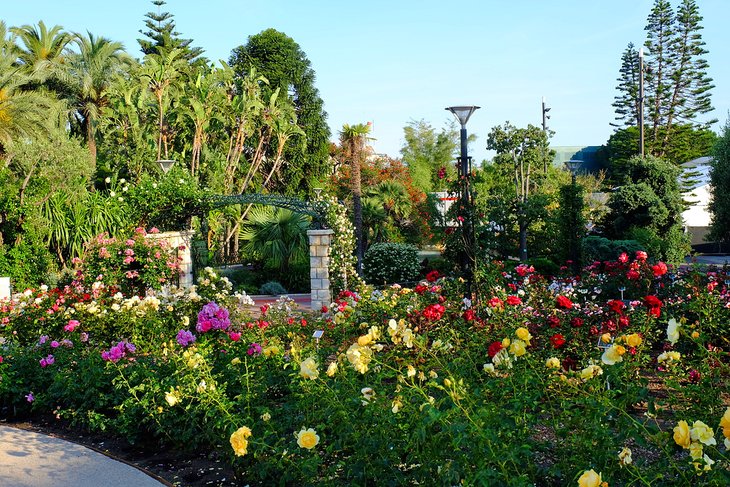
This exquisite garden was created by Prince Rainier III as a tribute to his wife Princess Grace and was opened on 18 June 1984. In Fontvieille Park, the Princess Grace Rose Garden encompasses almost four hectares including a small lake bordered by palm trees and an olive grove. The garden flourishes with 8,000 rose bushes in 300 varieties. Each rose has an identifying QR code (useful for gardeners). Special roses are named for the Princes and Princesses of the Grimaldi Royal Family. Choose a favorite flower and admire the contemporary sculptures among the blossoms. Spend some time relaxing on the park benches or go for a stroll around the grounds. Pleasant footpaths allow visitors to explore this charming place at leisure. The Rose Garden is maintained using eco-friendly practices and has been awarded the label of “Ecological Garden.”
Address: Avenue des Guelfes, Monaco
12 Collection de Voitures Anciennes (Collection of Vintage Cars)
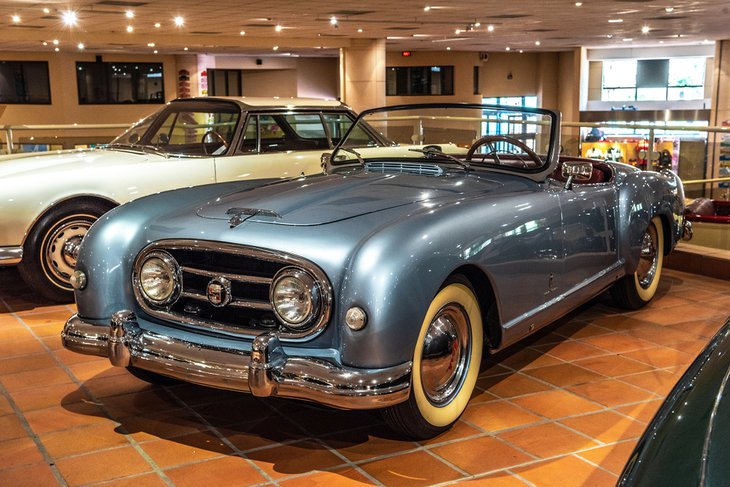
On the Terraces of Fontvieille in Monaco’s most modern neighborhood, this wonderful collection exhibits the Prince of Monaco’s vintage cars. The collection brings together almost 100 antique cars of various vintages and models, all made by prestigious European and American car companies. There are also six historic coaches on display.
Address: Terrasses de Fontvieille, Monaco
13 Jardin Japonais
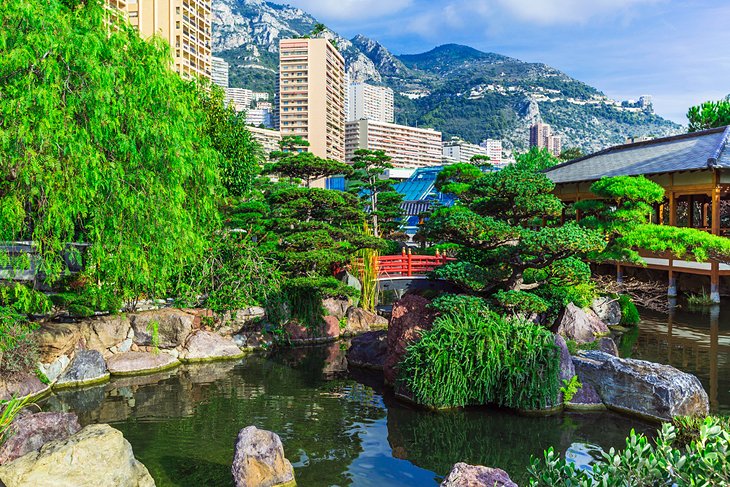
Escape to an authentic Japanese garden in a beautiful French Riviera setting. Built right onto a steep hillside in the eastern end of Monaco, the Jardin Japonais replicates a Zen garden with lush vegetation, water, and stones. The 7,000 square meter park includes a rushing waterfall, crystal-clear stream, and even a beach. This peaceful garden has a special atmosphere of harmony and serenity.
Address: Avenue Princesse Grace, Monte-Carlo
14 Musée de la Chapelle de la Visitation
In the spectacular setting of Le Rocher at the Place de la Visitation is the former Chapelle de la Visitation. This stunning 17th-century Baroque chapel has been converted into a noteworthy museum. The remarkable collection includes sacred works of art donated by Mrs. Piasecka Johnson. Among the masterpieces are paintings by Rubens, Zurbaran, Ribera, and Italian masters of the Baroque period.
Address: Place de la Visitation, Monaco-Ville
15 Fort Antoine: Outdoor Performances
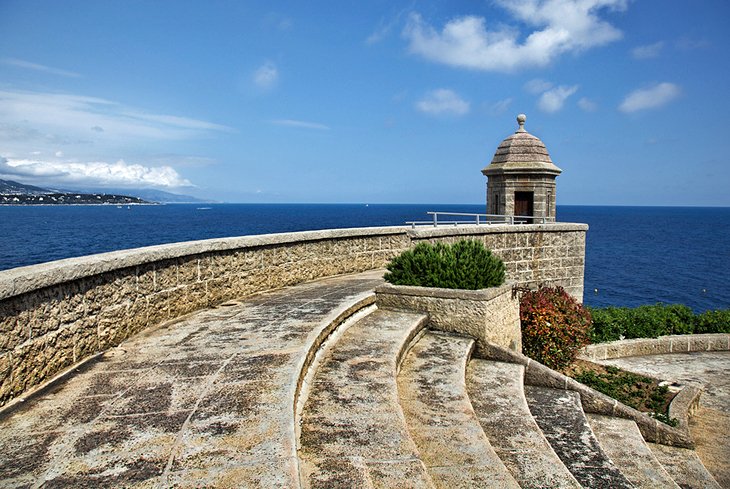
Built on the northeastern edge of Le Rocher, this historic military fortress is now used as an outdoor theater. On balmy summer evenings, the theater offers an enchanting setting to watch performances under the stars. Tickets are required to attend performances here (all performances are in French), which take place on Monday evenings at 9:30pm. Otherwise the venue is open to the public (free admission) from Monday through Friday from 10am-1pm and 2pm-5pm. The theater has a capacity of 350 spectators in tiered semicircular seating. The main reason to visit this site is the sweeping viewpoint. From Fort Antoine, it is possible to see the coastline of the French Riviera all the way to Antibes and the area around Cannes as well as in the other direction towards Menton and Italy.
Address: Avenue de la Quarantaine, Monaco-Ville
16 Moneghetti District
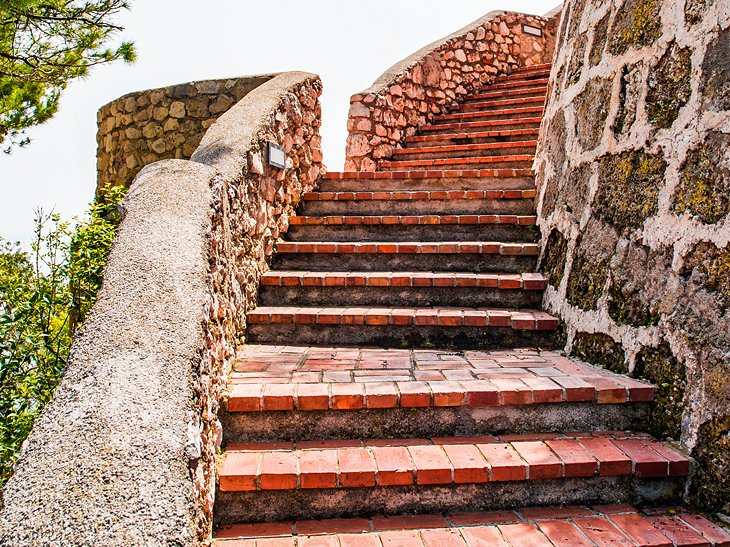
Seemingly endless steps and roads with hairpin bends wind around the eastern slope of Monaco, from the Tête de Chien to the Moyenne Corniche. These roads give access to the district of Moneghetti in the west of the principality, a part of the town built on terraces with lovely villas and gardens.
17 Michelin-Starred Fine Dining
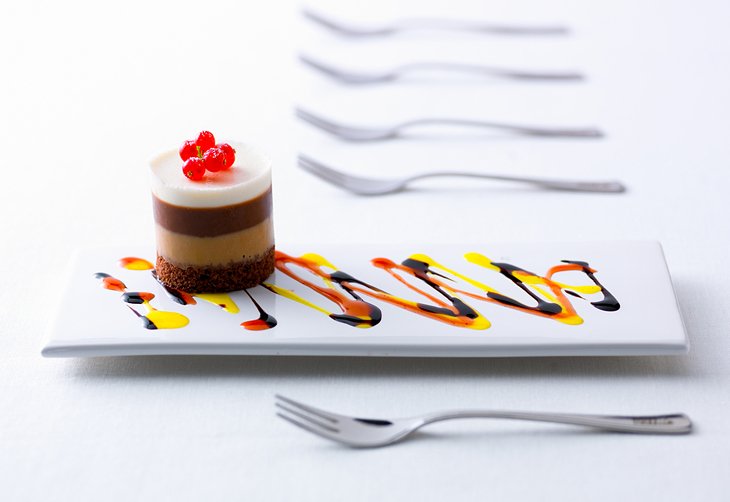
Monaco is famous for its fine-dining scene, which caters to a discerning clientele. The fancy restaurants are designed for gourmands who appreciate the best meals that money can buy. For those prepared to splurge, there are several legendary restaurants to try. The most renowned is Le Louis XV restaurant, which boasts three Michelin stars and features the haute Mediterranean cuisine of Alain Ducasse, prepared with the freshest local ingredients. Second in line is Joël Robuchon Monte-Carlo, with two Michelin stars. Located in the opulent Belle Epoque-style Hotel Hermitage Monte-Carlo, Le Vistamar has one Michelin star and offers distinctive modern cuisine, served on a terrace overlooking the sea. Another place to dine al fresco with dazzling views, the Michelin-starred Blue Bay restaurant at the Monte Carlo Bay Hotel and Resort features a trendy setting and intricate cuisine with a subtle West Indian influence. The restaurant’s Chef Marcel Ravin hails from the Caribbean island of Martinique. In the upscale Asian cuisine category, Yoshi delights guests with delicate, contemporary Japanese dishes. Yoshi is a collaboration between Joël Robuchon and Chef Takéo Yamazaki and has one Michelin star
 Noatech Pvt Ltd